


Whether you’re looking for the most reliable battery for your car, electronics, or other devices in cold weather, it’s crucial to understand the impact of low temperatures on battery performance. This guide will explore the types of batteries that perform best in freezing conditions, including AGM, lithium-ion, and gel batteries while offering practical tips to extend battery life in winter.
Understanding Batteries and Cold Weather

Battery Performance in Cold Weather
In colder temperatures, battery performance tends to decline due to the slower chemical reactions within the battery. Freezing temperatures can cause the electrolyte inside the battery to thicken, which impedes ion movement.
Thickened electrolytes lead to reduced current output, difficulty starting vehicles, and reduced performance of electronic devices. Additionally, cold weather can reduce the overall capacity of the battery, causing it to drain faster than usual.
Why Choosing the Right Battery for Cold Weather Matters
Choosing the right battery is crucial for ensuring reliable performance, particularly in cold climates. Batteries designed specifically for cold weather often feature specialized electrolyte chemistries and improved components.
AGM (Absorbent Glass Mat) batteries are known for their ability to perform well in low temperatures, while lithium-ion batteries generally outperform traditional lead-acid batteries. Choosing a battery manufactured specifically for cold conditions can help ensure reliable starting power and reduce the risk of starting failures or shortened battery life.
Types of Batteries for Cold Weather
AGM (Absorbent Glass Mat) Batteries
AGM batteries are well-suited for cold weather due to their unique design, which incorporates electrolyte absorbed into a glass mat separator. This construction helps prevent the electrolyte from thickening at low temperatures, ensuring reliable performance even in freezing conditions.
Lithium-Ion Batteries
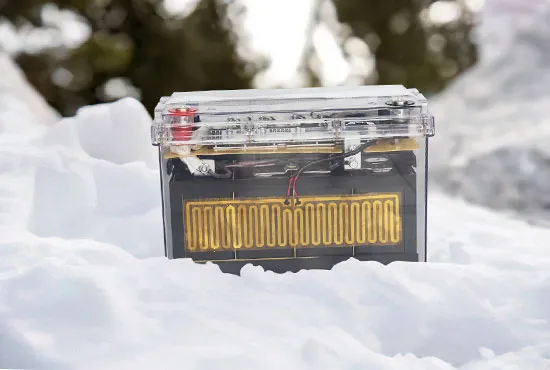
Lithium-ion batteries often outperform traditional lead-acid batteries in cold temperatures. With higher power density, they maintain performance better in lower temperatures. However, it’s important to choose lithium-ion batteries specifically designed for cold weather to ensure optimal performance in freezing climates. For more information on selecting the best lithium-ion battery option, check out Choosing the Right Lithium Battery for Your Business.
Cold Cranking Amps (CCA) Batteries
Batteries with a high Cold Cranking Amps (CCA) rating are designed to deliver powerful energy to start engines, even in freezing weather. These batteries can provide the current needed to start an engine in sub-zero temperatures. When selecting a battery for cold weather, consider choosing one with a higher CCA rating to guarantee reliable starting performance.
Gel Batteries
Gel batteries feature a thickened electrolyte less prone to freezing than traditional liquid electrolyte batteries. They are specifically designed to provide stable power even in extremely cold weather conditions.
Deep Cycle Batteries
Deep cycle batteries are designed to withstand repeated deep discharges and recharge, making them suitable for applications where batteries are frequently deeply discharged and recharged in cold weather, such as in marine and RV applications. These batteries provide reliable performance and longer lifespan in cold climates.
Choosing a battery manufactured specifically for cold weather ensures reliable operation and helps prevent issues like starting failures or reduced battery lifespan in freezing temperatures.
Cold Weather Battery Comparison
Here’s a comparison of different battery types suitable for cold weather, focusing on key characteristics such as charge/discharge behavior, Cold Cranking Amps (CCA), and Reserve Capacity (RC):
| Battery Type | Construction | Charging/Discharging Characteristics | Cold Cranking Amps (CCA) | Reserve Capacity (RC) | Cold Weather Performance |
| AGM (Absorbent Glass Mat) | Electrolyte absorbed in fiberglass mats | Quick recharge, low self-discharge rate | High | Moderate | Very good for cold weather conditions |
| Lithium-ion | Lithium chemistry | Rapid charging maintains performance in cold | Moderate to High | Low | Good for cold weather, especially with optimization |
| Cold-cranking amps (CCA) | Traditional lead-acid | Strong starting power in cold weather | Very High | Low | Very good for cold weather, excellent starting power |
| Gel | Thickened electrolyte | Slow discharge rate, consistent performance in cold | Moderate | Moderate | Reliable performance in very cold temperatures |
| Deep-cycle | Reinforced plates, deep-discharge design | Sustained performance in cold, long lifespan | Moderate | High | Effective for long-term cold weather use |
Choosing the Best Battery for Cold Weather
Cold Weather Battery Types and Performance
Lithium-Ion Batteries
- Chemistry: Lithium
- Cold Weather Performance: Rapid charging capability helps maintain performance in the cold
- Cold Cranking Amps (CCA): Moderate to High
- Reserve Capacity: Low
- Pros: Lithium-ion batteries perform well in cold weather, especially when optimized.
Conventional Lead-Acid Batteries
- Chemistry: Lead-acid
- Cold Weather Performance: Excellent starting power in cold temperatures
- Cold Cranking Amps (CCA): Very High
- Reserve Capacity: Low
- Pros: Conventional lead-acid batteries are well-suited to deliver robust starting power in frigid conditions.
Gel Batteries
- Chemistry: Thickened electrolyte
- Cold Weather Performance: Slow discharge rate and stable performance in extreme cold
- Cold Cranking Amps (CCA): Moderate
- Reserve Capacity: Moderate
- Pros: Gel batteries provide consistent performance in cold conditions.
Deep Cycle Batteries
- Chemistry: Reinforced plates, designed for deep discharge
- Cold Weather Performance: Excellent sustained performance and extended longevity in cold weather
- Cold Cranking Amps (CCA): Moderate
- Reserve Capacity: High
- Pros: Deep cycle batteries are ideal for prolonged use in cold weather, providing longer-lasting power.
Factors to Consider When Choosing a Battery for Cold Weather
Battery Type
Selecting the right battery for cold weather is crucial. Consider options such as AGM (Absorbent Glass Mat), lithium-ion, or gel batteries, all known for superior low-temperature performance.
Cold Cranking Amps (CCA)
A higher CCA rating indicates more starting power. This is essential for reliably starting your engine on cold mornings. Look for batteries with high CCA ratings to ensure reliable performance in cold weather.
Reserve Capacity (RC)
Reserve Capacity indicates how long a battery can provide power should the electrical system fail. Batteries with higher reserve capacity are beneficial in cold conditions, ensuring your vehicle or equipment continues to run when you need it most.
Construction and Durability
Robust battery construction is crucial for withstanding extreme temperature variations.
Compatibility
Ensure the battery you choose is compatible with your vehicle or equipment. Consider the size, terminal placement, and electrical requirements to avoid any compatibility issues.
Warranty
Check the manufacturer’s warranty, which guarantees the battery’s performance and protects against defects and premature failure. A reliable warranty is especially important for cold-weather use, given that battery failure can be more common in those conditions.
Choosing the right battery for cold weather is essential for ensuring reliable performance in freezing temperatures. Whether you opt for an AGM, lithium-ion, or gel battery, understanding their benefits and selecting the appropriate one based on your needs will ensure your vehicles and equipment operate smoothly throughout the winter season.