


Are your customers getting a seamless, reliable mobility experience? Electric wheelchair batteries are at the core of that experience, directly impacting user satisfaction and your brand’s reputation. As an electric wheelchair manufacturer, distributor, or retailer, you know the critical role a high-performance battery plays in a power chair’s functionality!
As a lithium battery industry expert with 17 years of experience, I’ve gained direct insights into these crucial components by interviewing several leading electric wheelchair battery manufacturers and R&D teams. Electric wheelchair batteries are highly scrutinized for their decisive impact on range, safety, and convenience, making them a key factor in user selection.
In this guide, you’ll learn about the different types of electric wheelchair batteries, their lifespan, key features to look for when choosing them, and common pitfalls to avoid during procurement and sales.
So, let’s get started!
Understanding Different Types of Electric Wheelchair Batteries
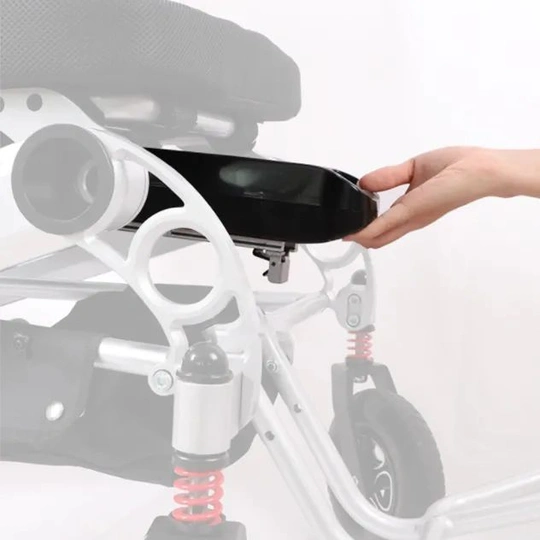
Lead-Acid Batteries: A Mature and Reliable Choice
Lead-acid batteries are a mature, widely used option. Their low cost and broad market acceptance have long made them an industry staple.SLA batteries are maintenance-free, requiring no water top-offs.
The important point is their high cost-effectiveness, allowing competitive pricing. Their stable supply chain, high market acceptance, and ease of user maintenance make them a reliable, low-risk choice.
Lithium Batteries: Leading the Industry Trend
Lithium batteries are rapidly becoming the new favorite in the electric wheelchair industry, especially LiFePO4, which offers immense benefits: lightweight design (easier carrying/maneuvering), ultra-long cycle life (fewer replacements, long-term savings), fast charging (greater convenience), and high energy density (longer range).
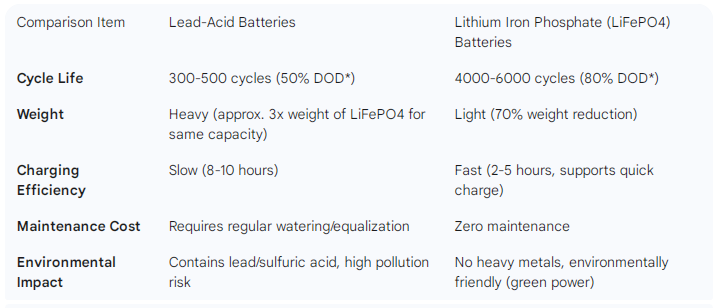
When using lithium electric wheelchair batteries, the initial costs are higher and integration/charging management systems require investment, these challenges unlock significant market premium potential and brand upgrading opportunities long-term. We’d better to pay more attention to the TCO (Total Cost of Ownership)not just initial cost.
Key Factors When Choosing Electric Wheelchair Batteries
Consider Compatibility with Electric Wheelchairs and Accessories
First and foremost, compatibility is the foundation of battery selection. A battery, no matter how good, is useless if it doesn’t seamlessly fit the wheelchair or its accessories.
Matching with the Electric Wheelchair
Ensure the lithium battery matches the electric wheelchair’s model and specifications,such as connector type, voltage (V), and current (A). Mismatches can lead to the battery not charging or operating correctly, or even damaging other vital wheelchair components, resulting in unnecessary after-sales issues and customer complaints.
Compatibility with Other Accessories
If the electric wheelchair is equipped with other accessories, such as a charger or controller, we also need to ensure the lithium battery is fully compatible with them. For instance, the charger’s output voltage and current must match the lithium battery’s input requirements; otherwise, it could affect charging efficiency or permanently damage the battery.
Pay Attention to Battery Parameters
Battery Capacity (Ah)
Battery capacity directly determines the range of the electric wheelchair. We should recommend different battery capacities based on the customer’s daily usage intensity, weight, and typical road conditions to enhance customer satisfaction.
For example:
If a customer primarily moves short distances within their community, a 12Ah lithium battery, offering about 20 km of range, might be perfectly sufficient.
If they frequently go out for shopping or walks, a 20Ah lithium battery, providing around 30 km of range, would be more suitable.
For users with long-distance travel needs, I strongly recommend a 40Ah lithium battery, whose approximate 60 km range is an excellent choice, significantly expanding their mobility.
Battery Lifespan and Warranty Policy
Battery lifespan is typically measured by charge-discharge cycles, generally around 300-500 cycles. Choosing a battery with a longer cycle life can significantly reduce the frequency of battery replacements, thereby lowering long-term usage costs for the customer.
Simultaneously, pay close attention to the lithium battery’s warranty period, usually 1-2 years. A longer warranty generally indicates greater manufacturer confidence in product quality and reflects the standard of their after-sales service. We should use this as a key point to demonstrate product reliability to our customers.
Weight and Portability
As users increasingly demand portability and convenience, battery weight and size become paramount. If a customer frequently needs to move their electric wheelchair (e.g., up/down stairs, on public transport, or in a car trunk), then we must recommend a lightweight, compact lithium battery for easy carrying and handling.
We can highlight lightweight batteries as a unique selling point for high-end or travel-specific wheelchairs, attracting users who prioritize ultimate convenience and flexibility.

Charging Time and Convenience
Fast Charging Technology: Incorporating fast charging technology can significantly reduce customer waiting times, greatly improving the user experience and thus increasing the overall product appeal. In today’s fast-paced life, no one wants to wait long for their battery to charge.
Charger Types: We need to clearly explain the pros and cons of on-board chargers (integrated into the wheelchair) versus external chargers to our customers. On-board chargers offer integrated convenience, while external chargers might provide faster charging speeds or more flexible charging locations. Based on the customer’s actual usage habits and scenarios, we should offer the best choice and recommendation.
Electric Wheelchair Battery Maintenance and Care
Use Original Chargers
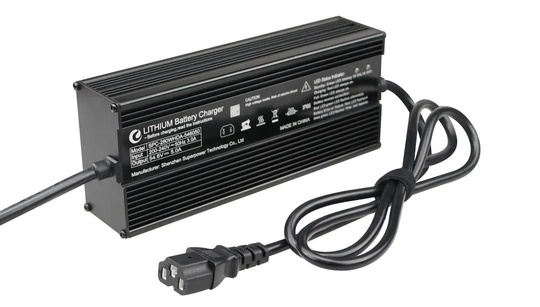
Always emphasize the importance of using the original charger provided by the electric wheelchair manufacturer. I’ve seen too many cases where using non-original chargers drastically shortens battery life. Chargers from different brands and models have varying output voltages and currents. Using an incompatible charger can lead to the battery being overcharged or over-discharged, shortening its lifespan, or even causing safety issues—something none of us want.
Control Charging Duration
Typically, a lithium battery takes 6-8 hours to fully charge. When the charging indicator light turns from red to green, it means the battery is full. At this point, if conditions allow, I suggest customers continue charging for an additional 1-1.5 hours for a trickle charge, but the continuous charging time must never exceed 12 hours. Prolonged overcharging can cause irreversible damage to the battery.
Avoid Over-Discharging
Over-discharging is a “silent killer” for lithium batteries, and we must guide our customers to prevent it.
Please be sure to remind customers to charge the battery when its power level is still at 20%-30%, avoiding waiting until the battery is completely depleted. It’s like a car’s fuel tank—we don’t wait until it’s empty to refuel, do we? Long-term over-discharging reduces the activity of chemical substances inside the battery, leading to a decrease in capacity and directly impacting the electric wheelchair’s range.
Proper Storage
Short-Term Storage: If the electric wheelchair won’t be used for a short period, say a few days, I advise customers to fully charge the battery before storing it. A fully charged battery is relatively stable and better maintains its activity.
Long-Term Storage: When the electric wheelchair won’t be used for an extended period, such as during vacations or winter, the lithium battery should be charged to about 50% for storage. More importantly, I suggest they recharge it approximately every two weeks to prevent self-discharge from dropping the power level too low. Furthermore, the storage environment temperature should be suitable, avoiding high heat and humidity. Advise customers to keep it in a dry place indoors with a relatively stable temperature, and never place it directly on cold outdoor ground, as extreme temperatures can cause significant damage to the battery.
Regular Inspection and Daily Use
Guide Customers on Terminal Corrosion Checks
We can teach customers some simple daily checks, such as inspecting battery terminals for signs of corrosion. Even a small corrosion spot can affect the battery’s normal output, which can prevent larger issues from occurring.
Charging Safety
I want to reiterate charging safety. Never use extension cords, as they can lead to unstable voltage or overheating; also, ensure the charging environment is well-ventilated to prevent heat buildup.
Avoid Overloading
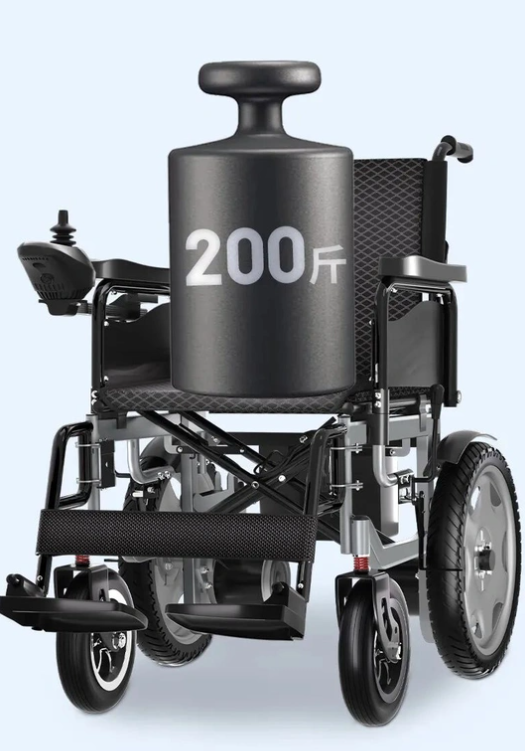
Please remind customers that overloading significantly increases the battery’s burden, directly impacting its lifespan. When using the wheelchair, always ensure it is within its rated load capacity. This is not only for the battery’s sake but, more importantly, for the user’s safety.
Mind Environmental Temperature
Batteries are very sensitive to temperature. In extremely cold or hot environments, battery performance can drastically decline. Therefore, I advise customers not to use electric wheelchairs for extended periods in temperatures below -10°C or above 50°C. Extreme temperatures accelerate battery aging and can even cause malfunctions.
Prevent Collisions and Falls
Lithium batteries have a precise internal structure. If subjected to a collision or fall, it could lead to internal short circuits, swelling, and other serious problems, directly affecting battery performance and lifespan. Hence, when using and handling the electric wheelchair, I always emphasize being careful and gentle.
Diagnosing Common Battery Issues and Optimizing After-Sales Service
As an electric wheelchair manufacturer, distributor, or retailer, efficient fault diagnosis and outstanding after-sales support are crucial for elevating your brand image and building customer loyalty. Timely resolution of battery issues not only appeases discontent but also transforms it into trust in your brand.
Reduced Range or Longer Charging Times
Signs of Battery Aging
Your service team should quickly identify these common signs of battery aging. For instance, if a battery that normally lasts all day now dies in half a day, or charging takes several hours longer than usual, it likely indicates declining battery performance. Prompt identification helps us provide customers with timely and accurate solutions.
Factors Affecting Capacity
We need to understand and be able to explain to customers the factors influencing battery capacity. Beyond natural aging, improper charging habits, frequent deep discharges, prolonged use in extreme temperatures, or even overloading, can all accelerate the decline in battery capacity.
We can use a battery health assessment to quantitatively show customers the battery’s actual state and provide professional communication strategies, such as advising them to adjust their usage habits to extend the existing battery’s life, or explaining why it’s time to consider a replacement.
Slow Charging or Failure to Charge
Charger Connection and Indicator Light Check
When customers complain about not being able to charge, the first step is to guide them through an initial troubleshooting check. Have them verify if the charger is correctly connected, if the power outlet has electricity, and the color and status of the charger’s indicator light. Many times, it’s just a simple connection issue or power failure.
Identifying Potential Charger or Battery Faults
If a simple check doesn’t resolve the issue, our technical support team needs to step in to help customers identify whether the problem lies with the charger or the battery itself. A quick diagnostic process is vital.
For example, if charging works normally with a known good charger, then the problem is with the original charger; otherwise, it’s likely a battery issue. We can provide a detailed troubleshooting flowchart for our technical team, ensuring every technician can handle these issues efficiently.
Battery Swelling and Other Physical Damage
Identifying Hazardous Conditions
We must educate customers and after-sales personnel on how to identify hazardous conditions. Battery swelling is a clear warning sign, indicating potential gas expansion or thermal runaway within the battery, posing a risk of fire or explosion. Any battery leakage, deformation, or unusual odor should also be immediately addressed.
Emergency Handling Procedures
Emergency handling procedures must be initiated immediately: First, stop using and charging the device immediately; second, move the electric wheelchair or battery to an open area, away from flammable materials; finally, contact a professional for handling, and never attempt to disassemble or repair it yourself. Ensuring customers and after-sales staff understand these steps is paramount for safety and risk reduction.
When to Consider Battery Replacement
Signs of Battery End-of-Life
We need to clearly inform customers about the signs that a battery is reaching the end of its life. Besides the significant reduction in range and abnormal charging mentioned above, these also include the electric wheelchair feeling underpowered or the battery draining quickly after being charged. When these phenomena become more frequent and severe, it’s the optimal time to help customers decide when to purchase a new battery.
Dual Battery System Replacement Strategy
For electric wheelchairs equipped with a dual battery system, we strongly recommend customers replace both batteries simultaneously. This is because both batteries usually age at a similar rate, and replacing only one might lead to performance differences between the new and old batteries, causing unbalanced charging, which could then affect overall performance and shorten the lifespan of the new battery. Replacing both ensures balanced performance and extends the overall lifespan of the entire battery system.
Sales Opportunity
View battery replacement needs as a significant sales opportunity. We can proactively promote the latest, higher-performing battery products to customers, for example, upgrading from lead-acid batteries to lighter, longer-range lithium batteries. By offering professional advice, new technological options, and convenient replacement services, we transform battery replacement needs into new sales opportunities, further enhancing customer loyalty and business volume. We might even consider launching a “trade-in” program for old batteries, which both meets customer needs and boosts sales.
Conclusion
From robust lead-acid batteries to cutting-edge lithium-ion technology, a deep understanding and precise selection can make your electric wheelchair products more competitive in the market.
We hope this guide has provided you with valuable insights to help you choose the most suitable electric wheelchair batteries for your product lines or customers. We specialize in providing durable, efficient, and diverse lithium battery solutions to meet the needs of all types of electric wheelchairs. If you’re looking for a reliable supplier of high-quality electric wheelchair batteries, contact us today to learn how we can support your business growth!